




Oral Science Journal
- Oral Science
How Xylitol + Hydroxyapatite Work Together as a Remineralizing Dream Team
By Andrew Talarzyk
·2 min read

Unlike many conventional toothpastes on the market, Larine's scientific approach relies on intentional, biocompatible ingredients. While each active element plays an individual role in protecting your oral health, they complement each other to supercharge enamel recovery.
The Remineralization Science
Your tooth enamel is constantly exposed to everyday acids that strip away crucial minerals, a process known as demineralization. Active remineralization helps restore these minerals to the surface, maintaining a solid defense against sensitivity and decay. Today, we’re looking closely at the synergistic relationship between xylitol and nano-hydroxyapatite (nHA).
|
|
|
|
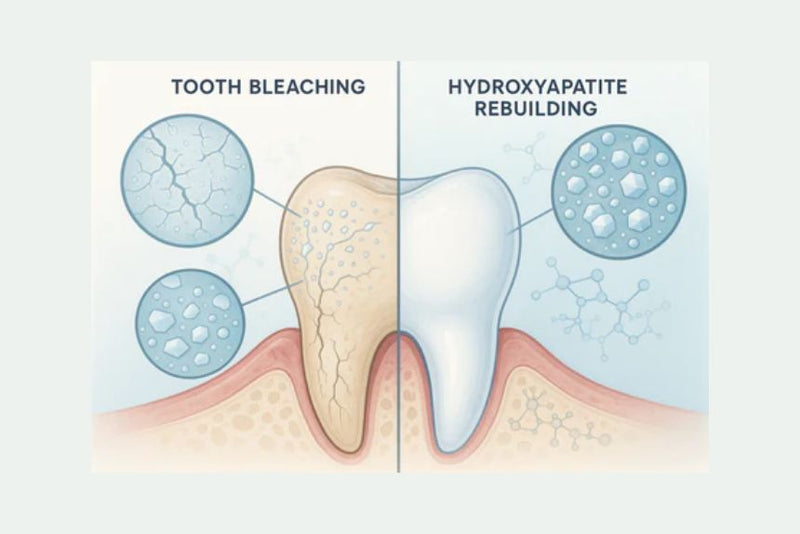
High-resolution clinical imaging showing the micro-fissure filling effect of nano-hydroxyapatite. |


How Nano-Hydroxyapatite Supports Enamel
Hydroxyapatite already exists in your enamel and bones—making up 97% of your enamel's structural composition. Biomimetic nano-hydroxyapatite integrates seamlessly during daily brushing. The particles bind to demineralized areas, smoothing microscopic irregularities and significantly reducing tooth sensitivity.
"Xylitol cuts off the acid-producing bacteria at the source, creating the perfect alkaline environment for nano-hydroxyapatite to bind and restore enamel mineral density."
Why We Pair It with Xylitol
Xylitol, a plant-derived five-carbon sugar, is highly effective at reducing bad bacteria in the mouth because they cannot ferment it. This stops acid production in its tracks, supporting a balanced oral pH. By maintaining an alkaline environment, xylitol directly fosters the ideal conditions for nano-hydroxyapatite to crystallize and bond with your teeth.
Frequently Asked Questions
Learn more about the science of biomimetic nano-hydroxyapatite and daily oral health.
What should I look for when choosing a remineralizing toothpaste?
lorem ipsum
Is nano-hydroxyapatite widely used in modern oral care?
lorem
ipsum
How long does it take to notice changes in tooth sensitivity?
ipsum lorem

About the Author
Andrew Talarzyk
Science Editor
Andrew translates complex clinical research into everyday wellness guides. He has spent over a decade writing about clean dental formulations and biocompatible mineral science.
Related Science Insights
-
 Science
Whiten Teeth Naturally with Hydroxyapatite: No Sensitivity, No Peroxide
What Is Hydroxyapatite, and Why Does It Matter? The science behind Enamel and Hydroxyapatite Tooth enamel is composed of around 97% hydroxyapatite, a naturally occurring mineral made of calcium and phosphate. It’s this mineral matrix that gives enamel its remarkable hardness and durability. However, daily wear from acidic foods, brushing, and environmental factors can gradually erode the enamel surface, making teeth appear dull, yellow, or even sensitive. Hydroxyapatite's remineralizing property plays a vital role in reversing this damage. As a biomimetic material, it can replenish lost minerals by binding to the tooth surface, restoring structure and integrity without the risks associated with peroxide-based whiteners. How Hydroxyapatite Mimics Natural Tooth Structure What sets hydroxyapatite apart is its compatibility with human enamel. Synthetic nano-hydroxyapatite particles are structurally and chemically identical to the minerals in your teeth. When applied through toothpaste or oral care products, these particles fill in microscopic pores and irregularities on the enamel surface, creating a smoother, more reflective surface, one that naturally appears whiter. Unlike whitening treatments that rely on bleaching agents, hydroxyapatite doesn’t strip or damage enamel. Instead, it strengthens and protects while gradually improving brightness, offering a safer long-term approach to whiter teeth. How Natural Whitening with Hydroxyapatite Works Gentle Polishing Action vs. Harsh Abrasives Traditional whitening toothpastes often rely on gritty abrasives like silica or baking soda to scrub away stains. While effective in the short term, these particles can wear down enamel with repeated use, leaving teeth vulnerable to sensitivity and further discoloration. Nano-Hydroxyapatite takes a different route. Its polishing effect is far more refined and biocompatible. The nanoparticles align with the natural enamel structure, smoothing out micro-scratches and surface roughness without stripping away protective layers. It gently removes surface stains while reinforcing tooth integrity, offering a much safer alternative to conventional abrasives. Stain Removal Without Enamel Erosion Surface stains from coffee, tea, red wine, or even highly pigmented foods accumulate over time. Instead of bleaching them chemically, hydroxyapatite bonds to the enamel and gradually fills in the tiny defects and irregularities where stains tend to settle. As the mineral layer is rebuilt, teeth appear cleaner and brighter, not because the surface has been stripped, but because it’s been restored. The result is a visible improvement in color without the erosion that comes from acid-based or peroxide-based treatments. You're not sacrificing enamel for aesthetics; you're actually improving both. Whiter Teeth Over Time: Realistic Expectations Unlike instant-bleach treatments that promise overnight results, hydroxyapatite works gradually. Because it's building enamel and strengthening the tooth surface, the whitening is cumulative, not immediate. Users typically begin to notice a brighter smile after a few weeks of consistent use, with continued improvements over time. The key is consistency. Natural whitening with hydroxyapatite isn’t about dramatic short-term change; it’s about long-term oral health and a whiter smile that lasts. You get results that look natural and feel sustainable, without the trade-offs of sensitivity or enamel loss. Hydroxyapatite vs. Traditional Whitening Methods No Peroxide, No Sensitivity Traditional whitening products often rely on hydrogen peroxide or carbamide peroxide to bleach teeth. While effective in removing stains, these agents can cause tooth sensitivity and gum irritation. A Solution for Sensitive Teeth For those with sensitive teeth, conventional whitening treatments can feel like a compromise between aesthetics and comfort. Hydroxyapatite provides a solution tailored to sensitive mouths. Its biocompatibility and remineralizing action not only avoid triggering discomfort but also help reduce sensitivity over time by reinforcing and sealing exposed dentinal tubules. Long-Term Enamel Health Benefits The problem with many whitening solutions is that they weaken what they’re meant to beautify: your enamel. Hydroxyapatite does the opposite. As a bioactive mineral, it actively strengthens and repairs the enamel layer while whitening. That means instead of stripping away surface layers, you’re building long-term resilience. Over time, your teeth don’t just look healthier; they actually are. How LarineCo Formulates for Natural Whitening Hydroxyapatite as the Foundation of Our Whitening System We use hydroxyapatite, a mineral that mimics natural enamel, to brighten teeth by repairing surface damage and smoothing enamel. It whitens by restoring, not stripping, your smile. Synergistic Agents: Xylitol, Silica, and Calcium Carbonate Our formula combines hydroxyapatite with xylitol to fight cavity-causing bacteria, hydrated silica for gentle stain removal, and calcium carbonate for added polishing. Each supports whitening while protecting enamel. Why We Exclude Peroxide and Harsh Bleaches We leave out peroxide and abrasive bleaches because they can cause sensitivity and enamel erosion. Our peroxide-free approach offers safe, effective whitening you can use daily. Clean Ingredients, Clinically Guided Formulation LarineCo uses only clean, purposeful ingredients, no sulfates, parabens, or fillers. Every formula is guided by dental science to support whitening, remineralization, and overall oral health. Incorporating Hydroxyapatite into Your Daily Oral Care Routine Hydroxyapatite fits seamlessly into your daily oral care routine. Just brush twice a day with an HAp-based toothpaste and follow with a mouthwash for added protection. For best results, use consistently, especially after meals or before bed. Pairing HAp with natural ingredients like xylitol and silica can enhance whitening while protecting enamel. Also, using it along with a Hydroxyapatite based gum could multiply the benefits. It’s an ideal solution for those with sensitive teeth, weakened enamel from braces, or anyone looking for a gentle, effective, and eco-conscious alternative to harsh bleaching treatments. Final Thoughts: Whiten Naturally, Protect Confidently Hydroxyapatite offers gentle whitening without harsh chemicals while strengthening and protecting your enamel. It’s a safe, effective choice for lasting oral health. Switching to hydroxyapatite-powered products means caring for your smile naturally and confidently. Try LarineCo’s hydroxyapatite gum today and experience the difference.
Read More
-
 Ingredient Education
Xylitol vs. Other Sugar Alcohols: What’s Best for Your Oral Health?
What Are Sugar Alcohols and Why Are They in Chewing Gum? Sugar alcohols, also known as polyols, are a type of low-digestible carbohydrate that tastes sweet like sugar but contains fewer calories and has a lower impact on blood sugar. Despite the name, they’re neither sugars nor alcohols in the traditional sense. Chemically, they’re hybrids, part sugar molecule, part alcohol molecule, which gives them a sweet flavour without the drawbacks of table sugar. In chewing gum, sugar alcohols serve as non-carcinogenic sweeteners, meaning they don't contribute to tooth decay. Unlike sugar, they’re not fermented by oral bacteria into acid, so they don’t erode enamel or fuel cavities. They also offer a pleasant, cooling sweetness without spiking blood glucose levels, making them popular in diabetic-friendly and low-sugar products. The standout benefit of sugar alcohols in oral care is their ability to reduce harmful bacteria that cause plaque and tooth decay. Xylitol, in particular, is known to actively disrupt Streptococcus mutans, a primary culprit in cavities. Some sugar alcohols also stimulate saliva production, which helps neutralize acids and remineralize enamel. However, not all polyols are equal in terms of digestion. While xylitol and sorbitol are partially absorbed and can cause bloating in sensitive individuals at high doses, erythritol is generally better tolerated because it's absorbed in the small intestine and excreted unchanged. In short, sugar alcohols sweeten gum without damaging teeth, and some, like xylitol, go a step further by actively protecting them. Spotlight on Xylitol Among all sugar alcohols, xylitol stands out for its powerful, research-backed benefits in oral care. It’s not just a sweetener, it’s an active agent in maintaining a healthier mouth. Here's how it works: How Xylitol Works in the Mouth Xylitol doesn’t ferment in the mouth the way sugar does. That means when you chew xylitol gum, harmful bacteria don’t get the fuel they need to produce acid. Without that acid, enamel erosion slows down, and the environment in your mouth becomes less hostile to your teeth. Inhibits Streptococcus mutans Streptococcus mutans is the main bacterium behind plaque and cavities. Xylitol disrupts its ability to stick to tooth surfaces and feed on sugars. Over time, regular xylitol use can lead to a reduction in the population of these cavity-causing bacteria. So in short, Xylitol helps in fighting cavities while also enhancing the taste. Remineralization Support By creating a more alkaline environment in the mouth, xylitol supports the natural remineralization process. That means calcium and phosphate in your saliva are more likely to bind to your enamel, helping to repair early signs of decay before they become cavities. Saliva Stimulation Chewing gum with xylitol triggers increased saliva flow, which is one of your body’s best defenses against acid attack. Saliva buffers pH, washes away food particles, and delivers minerals needed to strengthen enamel. More saliva means a cleaner, more balanced mouth. How Erythritol and Sorbitol Stack Up Sugar alcohols like erythritol and sorbitol are commonly used in sugar-free gums and mints, but not all polyols deliver the same benefits when it comes to oral health and digestion. Here’s how they compare to xylitol: Erythritol: Benefits and Limitations Erythritol is a non-fermentable sugar alcohol, meaning oral bacteria can’t break it down to produce acid, just like xylitol. It also has virtually zero calories and a low glycemic index, making it popular for diabetic-friendly and keto products. However, when it comes to actively inhibiting plaque-forming bacteria, erythritol appears less potent than xylitol. Some studies suggest it can help reduce plaque and acid production, but its impact on Streptococcus mutans isn’t as strong or well-documented. Think of it as passive protection rather than active disruption. Sorbitol: Common but Less Effective Sorbitol is the most widely used sugar alcohol in sugar-free products, largely because it’s inexpensive and has a mild sweetness. But its effectiveness in oral care is much weaker than xylitol’s. While better than sugar, sorbitol is slowly fermentable by some oral bacteria. That means long-term use can still allow acid-producing bacteria to thrive, albeit at a slower rate than with sucrose. It's also less effective at reducing S. mutans or supporting enamel remineralization. Digestive Tolerance: Xylitol vs. Erythritol vs. Sorbitol All sugar alcohols can cause gastrointestinal discomfort when consumed in large amounts, but not equally: Erythritol has the best digestive tolerance because most of it is absorbed in the small intestine and excreted unchanged. Xylitol is moderately well-tolerated, especially in chewing gum amounts, but may cause gas or bloating in higher doses. Sorbitol is the least tolerated, often causing bloating, gas, or laxative effects even at modest doses. In short, xylitol balances oral efficacy with digestive tolerability, while erythritol leans gentler on the gut but is weaker on plaque, and sorbitol underperforms on both fronts. Key Differences at a Glance Feature Xylitol Erythritol Sorbitol Dental Impact Actively inhibits S. mutans; promotes remineralization Non-fermentable; mild plaque reduction Slowly fermentable; weak cavity protection Glycemic Index 7 0 9–13 Gut Tolerance Moderate; safe in gum doses High; best tolerated Low; often causes gas/bloating Cooling Effect Mild cooling sensation Strong cooling effect Minimal to none Sweetness Level ~100% as sweet as sugar ~70% of sugar ~60% of sugar Cost & Use in Gum Mid-range; widely used in premium gums Expensive; used selectively Cheap; common in budget products What Do Studies Say? Xylitol and Caries Reduction: Multiple clinical trials have confirmed xylitol’s ability to reduce dental caries, especially in children and high-risk populations. A landmark Finnish study found that regular xylitol gum use reduced cavity incidence by up to 70%. Unlike sorbitol, which only slows decay, xylitol disrupts the life cycle of Streptococcus mutans, the primary bacteria responsible for tooth decay. Long-Term Benefits Supported by Research: Studies suggest xylitol may also lower the transmission of cavity-causing bacteria from parent to child, making it valuable for family oral care. Long-term usage shows cumulative benefits, particularly when used 3–5 times a day after meals. Professional Recommendations: Organizations like the American Academy of Pediatric Dentistry and the European Food Safety Authority support xylitol’s dental benefits. Many dental professionals now recommend xylitol gum as a preventive measure alongside brushing and flossing. Which One Should You Choose and Why? For Oral Health? Choose Xylitol. If your goal is cavity prevention and overall oral health, xylitol is the clear winner. It’s the only sugar alcohol shown to actively reduce levels of Streptococcus mutans, support remineralization, and stimulate saliva, all critical factors in maintaining healthy teeth and gums. For Sensitive Stomachs? Erythritol Is Gentler. Erythritol is largely absorbed in the small intestine and excreted unchanged, making it easier on the gut even in larger quantities. However, small chewing gum doses of Xyltiol is pretty much harmless. On a Budget? Sorbitol Is Ubiquitous. Sorbitol is the most commonly used sugar alcohol because it’s inexpensive and easy to formulate with. However, it offers minimal dental benefits compared to xylitol and is more likely to ferment in the gut, causing discomfort for some. Choose Based on Your Goal. Dental care? Go with xylitol for its plaque-fighting, tooth-friendly properties. Caloric control or keto diet? Erythritol is virtually non-caloric and has a low glycemic impact. Everyday sweetener or mainstream gum? Sorbitol is the standard but not the standout. All in all, xylitol stands out as the most well-rounded option among sugar alcohols. It balances proven dental benefits, a pleasant taste, helps in reducing bad breath, moderate sweetness, and decent digestive tolerance for most people. While erythritol and sorbitol have their specific use cases, like gut sensitivity or lower cost, xylitol offers a rare combination of oral care and everyday usability, making it the top choice for those seeking both function and flavor in a sugar substitute. LarineCo Chewing Gums Are Powered by Xylitol At LarineCo, we intentionally formulate our chewing gums with xylitol as the primary sweetener, not just for taste, but for its clinically proven oral health benefits. Unlike other polyols that merely replace sugar, xylitol actively inhibits cavity-causing bacteria, supports remineralization, and stimulates saliva flow, all of which are essential for maintaining strong, healthy teeth. Dental wellness is not an afterthought; it’s core to our product philosophy. Every piece of Larineco remineralizing gum is designed to do more than freshen breath; it’s a functional tool for daily oral care. We also take pride in our clean-label approach. You won’t find synthetic sweeteners, artificial preservatives, or chemical fillers in our gums. Just naturally derived ingredients that support your health without compromise. Try Larineco gums today and experience gum that goes beyond flavor, clinically backed, dentist-aligned, and designed to protect.
Read More
-
 Product Education
LarineCo Remineralizing Gum vs Conventional Gum: What’s the Real Difference?
Introduction Chewing gum isn’t just a habit; it can play a meaningful role in your oral health. But not all gums are created equal. While most conventional gums focus on flavor, freshness, and masking bad breath, LarineCo Gum is built around something different: biology-first, science-backed support for your mouth. This guide compares LarineCo remineralizing gums with typical gums you’ll find at the checkout line. We’ll break down the ingredients, the impact on oral health, and what actually happens when you chew. The difference isn’t just in the label, it’s in how your body responds. LarineCo Remineralizing Gum vs. Conventional Gum: A Detailed Comparison Both LarineCo gum and conventional chewing gums serve different purposes and come with distinct features. In this section, we’ll explore how they differ across key areas like ingredients, oral health benefits, mechanisms of action, taste, texture, and more. Understanding these differences can help you make an informed choice about which gum best fits your needs. Ingredients Breakdown: Science vs. Sweeteners LarineCo Ingredients A minimal, functional formula rooted in oral biology backed by science and experts. Nano-Hydroxyapatite A biomimetic mineral that replenishes enamel and helps repair microscopic tooth damage by its remineralizing properties, backed by decades of dental research. Eggshell Powder A natural source of calcium carbonate that supports remineralization. Organic Xylitol Plant-derived sweetener that helps to help reduce plaque buildup by reducing cavity-causing bacteria and promoting saliva flow. Chicle, Mastic, Myrrh, Acacia, Spruce Gums Ancient tree resins with antimicrobial, anti-inflammatory properties have been used for centuries to maintain oral hygiene. Calcium Bentonite Clay Gentle detoxifier and source of trace minerals that can help neutralize oral acidity. Organic Terpene Blend Naturally occurring compounds with antibacterial and refreshing effects add therapeutic aroma, not just flavor. Natural Flavors Only No artificial flavorings or masking agents, what you taste is real. Clean, Transparent Formulation No artificial colors, synthetic fillers, or preservatives. Cruelty-free, gluten-free, and intentionally minimalist Conventional Gum Ingredients Designed for flavor and shelf life, not your teeth. Artificial Sweeteners Aspartame, sorbitol, and others may taste sweet but offer no oral health benefits and can disrupt the microbiome. Synthetic Colors and Flavors Lab-made compounds that are designed for sensory impact, not safety or health function. Gum Base with Petrochemical Derivatives Made from plastics, resins, and synthetic rubber ingredients, you won’t see them listed in detail for a reason. Preservatives and Fillers Shelf-stable, mass-produced gums rely on additives that do nothing for your mouth and may do harm. Bottom line: LarineCo remineralizing gums are what gum should have been all along, a tool for tooth remineralization, not just a flavored chew that does nothing. How They Work: Active Function vs. Passive Chewing Not all gum is created equal. What it does inside your mouth makes all the difference. This section breaks down the functional differences between LarineCo’s purpose-built remineralizing gum and the passive, often cosmetic effects of conventional chewing gums. LarineCo’s Mechanism of Action LarineCo gum doesn’t just freshen breath, it actively supports oral health. Its formula is designed around science-backed ingredients that do real work while you chew: Remineralizes enamel: Nano-hydroxyapatite and eggshell powder help rebuild microscopic weak spots in enamel by delivering bioavailable calcium and phosphate directly to the surface of your teeth. Neutralizes pH: Xylitol helps shift your mouth’s pH away from the acidic zone where enamel erosion thrives. This helps help maintain oral hygiene before they begin. Starves harmful bacteria: Xylitol also interferes with the metabolism of Streptococcus mutans, one of the key culprits behind tooth decay, reducing their ability to stick to your teeth and form plaque. Boosts natural salivary repair: Chewing LarineCo’s gum stimulates saliva, the body’s first line of defense, which enhances natural remineralization, buffers acids, and helps flush out food debris and bacteria. Together, these functions make LarineCo gums a daily tool for strengthening teeth, not just masking problems. Conventional Gum’s Role Conventional gum is mostly cosmetic and falls short when it comes to long-term oral health benefits: Masks bad breath: Most brands rely on synthetic mint flavors and sweeteners to temporarily freshen your breath without addressing the underlying bacterial cause. Stimulates some saliva: Like any chewing gum, it increases saliva flow, but without active remineralizing ingredients, this benefit is short-lived. Often contains sugar alcohols that irritate: Ingredients like sorbitol and maltitol can cause bloating or GI discomfort for sensitive users, with no upside for dental health. In essence, conventional gum keeps your mouth busy without making it better. LarineCo gum, on the other hand, turns every chew into a step toward stronger, healthier teeth. Oral Health Benefits: Prevention vs. Surface Fixes LarineCo Remineralizing Gum Supports long-term enamel health Reduces cavity-causing bacteria Helps prevent decay and sensitivity Strengthens teeth with nano-hydroxyapatite Promotes a healthier oral microbiome Conventional Gum Temporary breath freshening Minimal or no impact on enamel health May irritate the gut (due to sugar alcohols) Potential blood sugar spikes (in sugar-based gums) Lacks active ingredients for meaningful oral repair Taste and Texture: Enjoyment without Trade-offs LarineCo gum delivers a naturally pleasant taste using botanical extracts, offering a clean aftertaste without the excessive sweetness or artificial linger common in conventional gums. LarineCo gum’s smooth texture feels satisfying to chew without becoming rubbery or sticky over time. In contrast, traditional gums often rely on artificial sweeteners like aspartame or sorbitol, leading to an overly sweet or synthetic mouthfeel that can leave a chemical aftertaste. Comparison Table: At a Glance Feature LarineCo Gum Conventional Gum Ingredients Nano-hydroxyapatite, xylitol, natural flavors, clean label Artificial sweeteners, synthetic flavors, gum base with petrochemicals Function Actively remineralizes enamel, reduces harmful bacteria, boosts saliva Masks bad breath, stimulates saliva, no active oral repair Oral Health Impact Strengthens enamel, prevents decay, reduces sensitivity Temporary freshening, little to no dental benefits Flavor & Experience Natural flavors, clean aftertaste, smooth texture Overly sweet, artificial taste, rubbery texture Transparency Clear, clean-label formulation, cruelty-free, gluten-free Hidden additives, synthetic fillers, unclear sourcing Conclusion: Chew Smarter, Not Just Sweeter LarineCo remineralizing gum isn’t just a “better gum,” it represents a whole new category of oral care. By combining clean, science-backed ingredients with a focus on biological enamel repair and long-term dental health, LarineCo aligns perfectly with today’s wellness-driven consumers. It’s more than fresh breath; it’s a smart, effective way to support your teeth every day. Make the switch to chewing smarter. Choose LarineCo for oral care that goes beyond the surface.
Read More

