




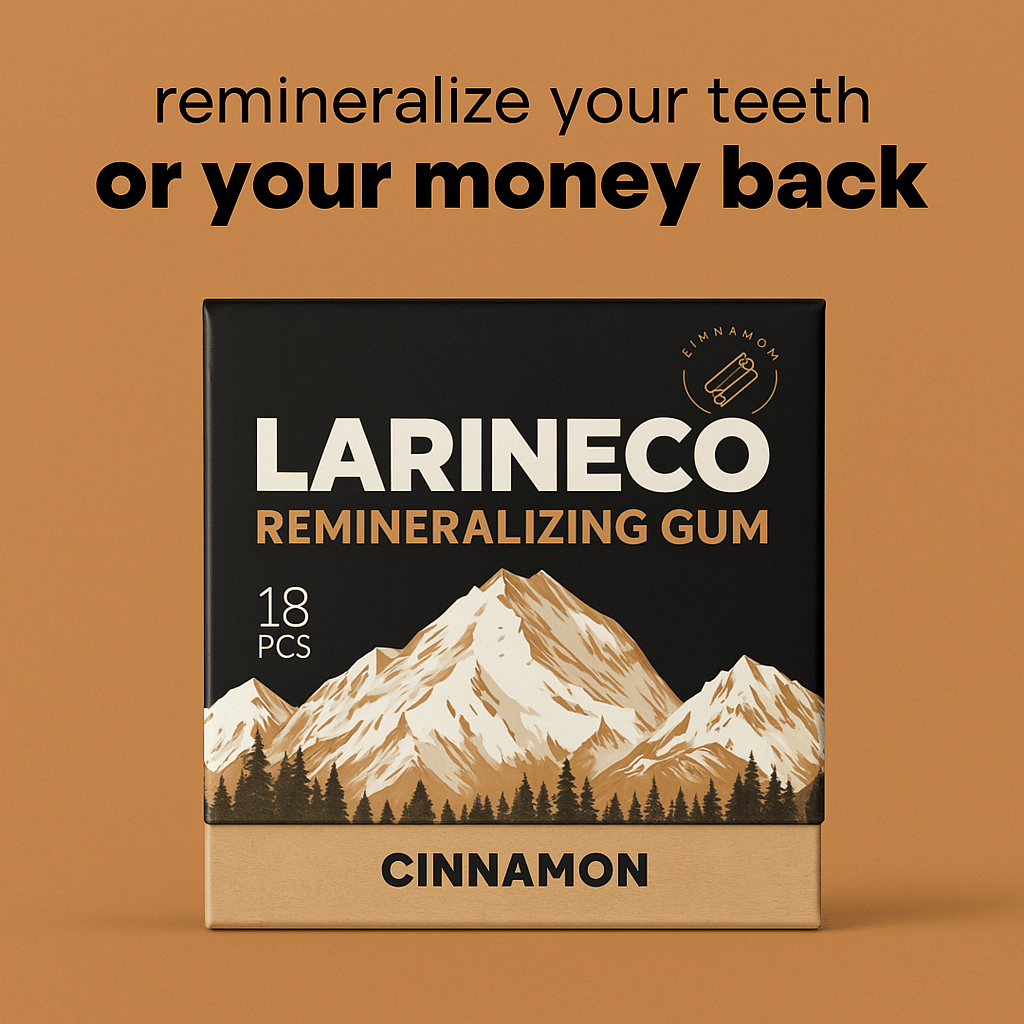


PROTECT YOUR ENAMEL - SHOP NOW
Based on Ingredient Research
Sponsored Content
Millions Of Adults Live With Tooth Sensitivity, And Most Just Learn To Wince Through It
And the simple daily habit thousands use to protect sensitive teeth between brushes.

By | May 6, 2026
Estimated 5-7 Minute Read

Before

After
Sarah thought the sharp zing she felt every time she bit into ice cream was just something she had to live with.
This 41 year old bookkeeper from Denver had been flinching at cold drinks for so long, she'd quietly stopped ordering them.
The straw angled to the back of her mouth. The winter mornings when one breath of cold air made her jaw jump. The way she waved off dessert because a single cold spoonful was not worth the ache.
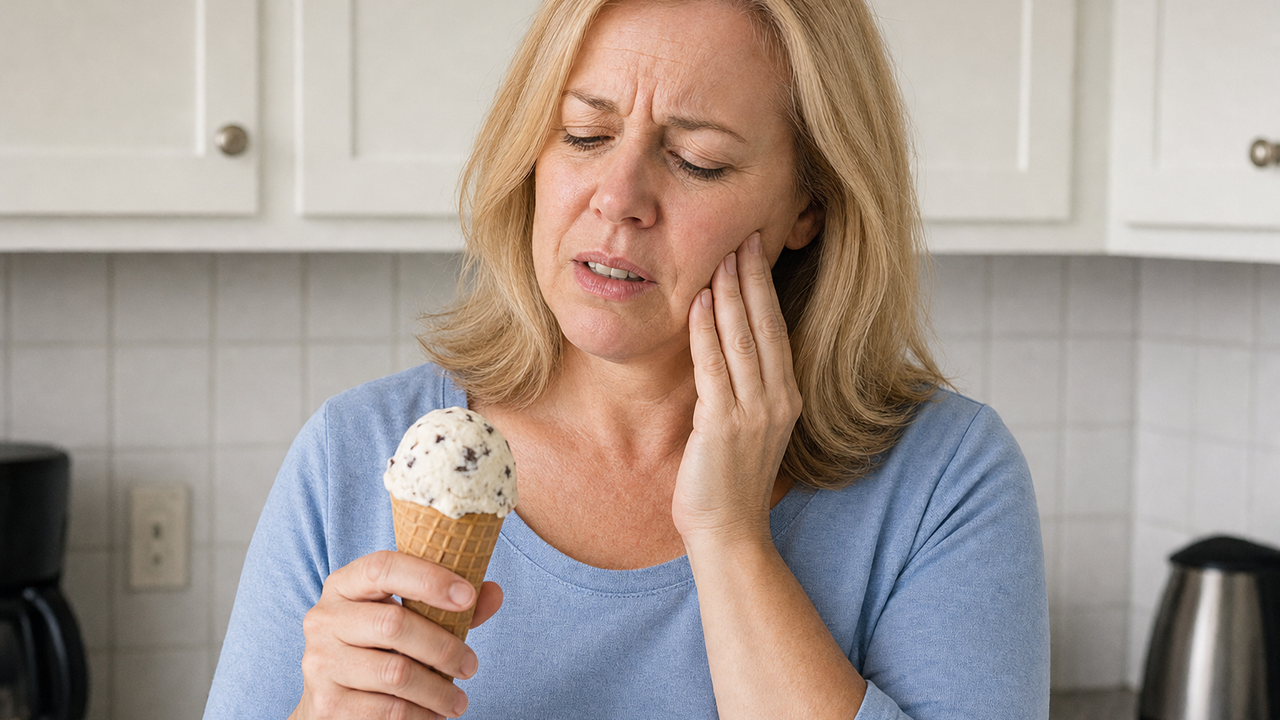
"I just figured cold stuff and I were finished," she admits.
"I love iced coffee. Giving it up felt silly, but what else was I supposed to do?"
But Sarah's teeth weren't simply "getting old." And she is far from alone…
Look, The Symptoms You Think Are Normal... Aren't
Do any of these sound familiar?

A sharp zing when you bite into ice cream or sip something cold

That wince when hot coffee hits one side of your mouth

Sweet foods setting off a quick ache

A jolt of cold air on your teeth on a winter morning

Brushing near the gumline feeling tender

Sipping cold drinks through a straw just to dodge the twinge

Backing off citrus, wine, or soda because your teeth "feel it"
Most people notice at least two or three of these on a regular basis.
They chalk it up to age, thin enamel, or plain bad luck. They swap toothpastes, skip the ice water, and try to work around each twinge on its own.
But what if all of it traced back to the same quiet problem?

What if the research says the surface of your enamel is slowly losing minerals right now, quietly, and most people have no clue until that first cold zing hits?

The Silent Erosion On Your Teeth
If two or three of those sounded like your own mouth…
Then here's what's really going on.
The surface of your enamel is quietly giving up the minerals that keep it hard.
Here's the part nobody spells out. Coffee, soda, citrus, wine, even a lot of foods that count as healthy keep your mouth acidic for long stretches of the day. Each acidic hit pulls a little calcium and phosphate out of your enamel, and that slow drain is called demineralization.
Do it often enough and the hard outer shell thins in tiny spots. The softer layer underneath, dentin, sits closer to the nerve, and it lets cold, heat, and sweet get through. That is the zing you feel.
And most people never realize it is happening…
Researchers who study enamel have found that every acidic sip and bite is quietly pulling minerals out of your teeth, hour after hour
Here is what that slowly does:

Softens your enamel - so the hard shell that guards your teeth wears thinner
Strips out minerals - the calcium and phosphate that keep enamel dense and strong
Opens tiny channels - exposing the softer dentin layer hidden just underneath
Lets triggers reach the nerve - which is exactly where that sharp zing comes from
Comes back day after day - because coffee, soda and acidic food keep your mouth acidic for hours

It's a lot like rain wearing down soft stone, one drop at a time, quietly and without any warning.
No wonder your teeth start reacting to cold, heat, and sweets when you least expect it.
And here is the thing, it isn't really your fault.
Your enamel has been losing minerals for years, and nobody ever told you.
You Brush Every Single Day, So Why Do Your Teeth Still Zing…
Because Brushing Can't Put Back The Minerals You've Lost
Here's what makes it even trickier...
The real trouble is happening in a layer your toothbrush simply can't reach.
Just under your enamel sits dentin, and it's packed with microscopic tubes that lead straight to the nerve. (Picture thousands of tiny straws, each one a shortcut for cold and sweet.)
Once those tubes are open, they are hard to seal back up.
Dental researchers have counted tens of thousands of these open tubules in a single square millimeter of exposed dentin, and every one of them is a direct line to the nerve.
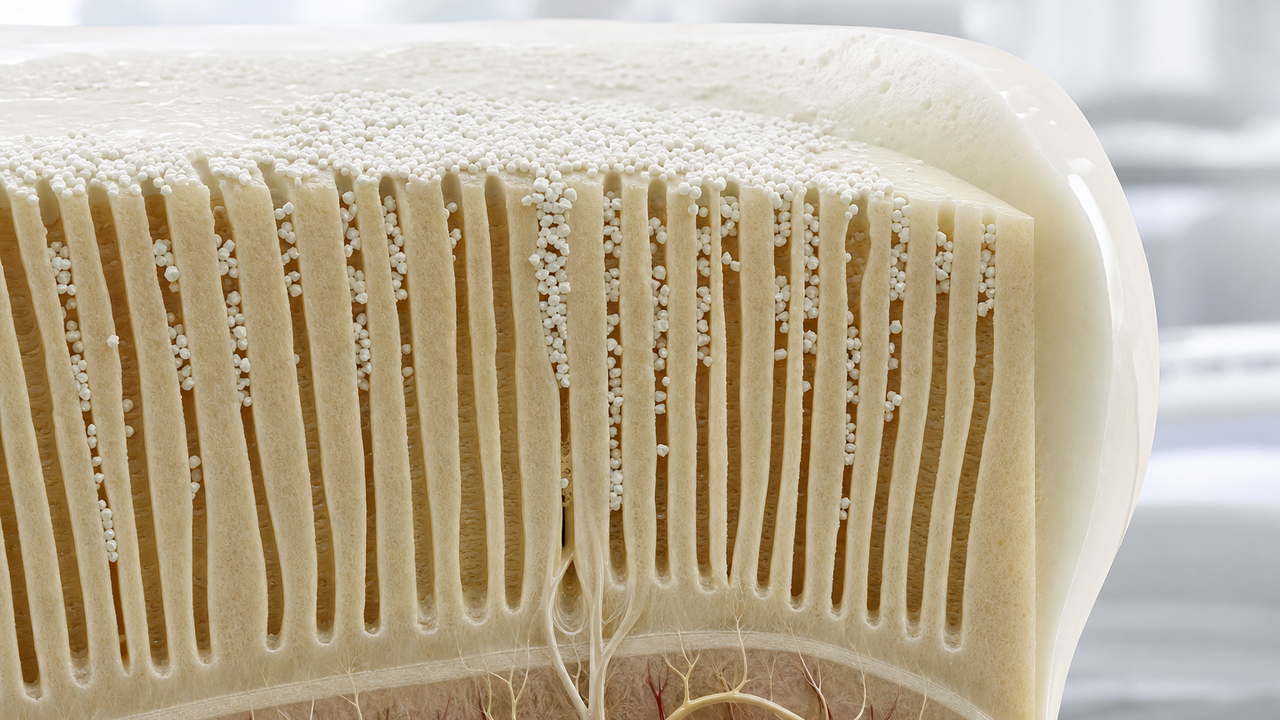
It's like repainting a wall that has cracks running through it. Brushing keeps your teeth clean, but on its own it was never going to rebuild what the acid dissolved.
That's why the usual fixes never quite make the sensitivity go away.

Sensitivity toothpaste?
Numbs the nerve for a bit, but does not put back the minerals your enamel has lost.

Just avoiding cold drinks?
Dodges the pain, does nothing for the lost minerals.

Rinsing more often?
Feels fresh, but it can't rebuild what's worn away.
So the sensitivity hangs on, shrugging off fix after fix, while people spend hundreds trying to numb or rinse the ache away, without ever putting back the minerals they have lost. And the moment you ease up, that zing comes right back.
It's like patching a leak without ever fixing the pipe…
And it keeps returning until you rebuild what you lost.

The Little-Known Mineral That Changes Everything
This is where Sarah's story takes a turn that might change yours too.
After years of just wincing through it, Sarah stumbled onto something that finally made a difference.
She read about a mineral that dentists in Japan have quietly relied on since the early 1990s.
Nano-hydroxyapatite, the very same mineral that makes up 97% of your tooth enamel.
It also forms about 70% of the dentin underneath, the layer that gets exposed when enamel wears thin.
And honestly, its backstory is wild.

NASA first developed a synthetic version back in the 1970s, to help astronauts hold onto tooth and bone mineral density in space.
A Japanese company licensed it in 1980, and by 1993 it was approved for dental use in Japan.
Today it turns up in oral care across more than 70 countries, and it has been used that way for over 40 years.
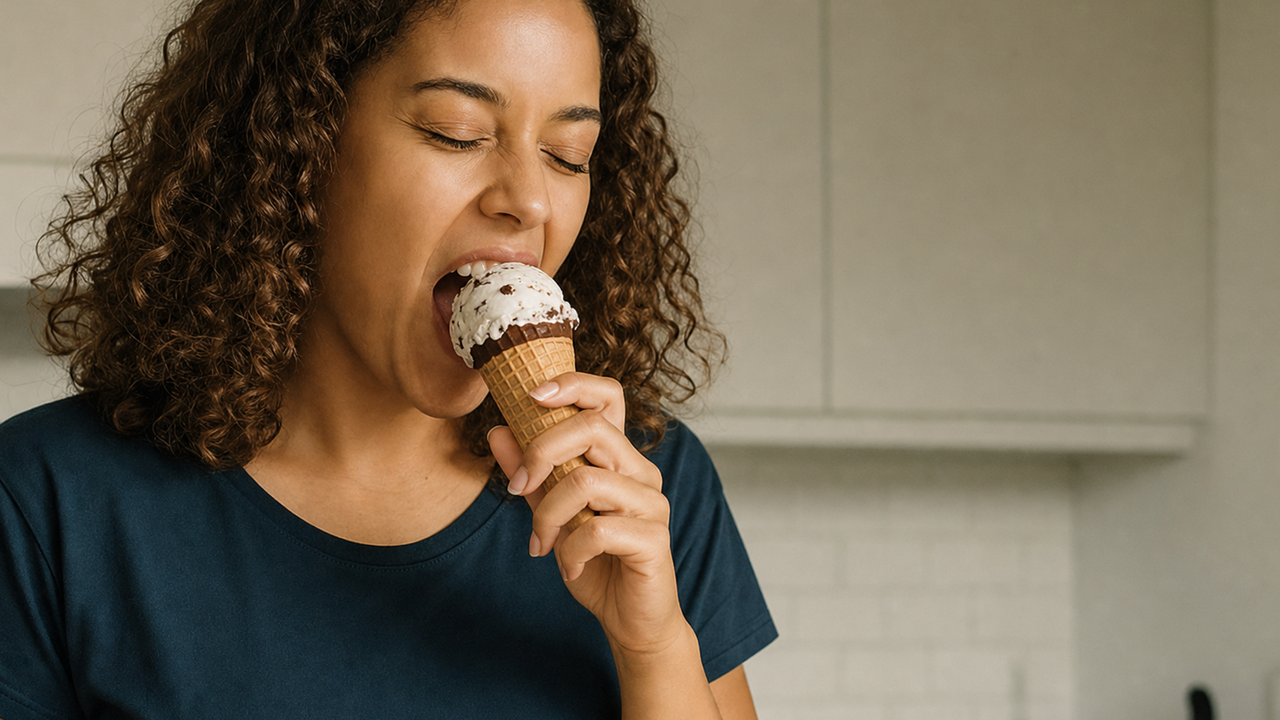
Here's the part that clicked for Sarah. Because it's the same mineral as your enamel, your mouth recognizes it instead of treating it as a stranger.
And if a little gets swallowed, it simply breaks down into calcium and phosphate.
In other words, it belongs there.
But here's the part that surprised me most…
Not all hydroxyapatite is built the same.
The kind that actually works is nano-sized, small enough to settle into the microscopic rough spots on worn teeth.
And here's what nobody tells you: particle size is EVERYTHING.
Bigger particles mostly wash away before they can do much.
It's a bit like sand versus fine powder. Only the fine powder settles into the tiny gaps on a rough surface.

Research suggests the nano-sized form settles onto enamel and helps fill in those worn spots.
That's why the oral care world has leaned on nano-hydroxyapatite for decades, and why it's the ingredient I now look for on a label.
As it coats the surface, it can slip into those open dentin tubes and take up the space that was letting cold and sweet rush straight through.
Think of it like this: a worn tooth is a rough, open sponge. Nano-hydroxyapatite is the smooth filler that settles into the gaps.
With those channels occupied, fewer triggers reach the nerve, so that sharp zing has far less of a path to travel.
So how do you actually get this mineral onto your teeth every single day?
The Two-Step Routine That's Helping Thousands Of Sensitive Smiles
Remember Sarah?
She figured out that brushing was only half the story. If the enamel you have already worn away never gets replaced, those cold and sweet zings just keep coming back, no matter how carefully you brush.
That is why her routine came down to two simple moves, working together every day:

First: Replenish With Nano-Hydroxyapatite - the same mineral your enamel is built from, put back where it has worn thin.

Second: Protect And Refresh With Xylitol - it helps build a buffer against hot, cold, and sweet triggers while xylitol keeps your mouth balanced.
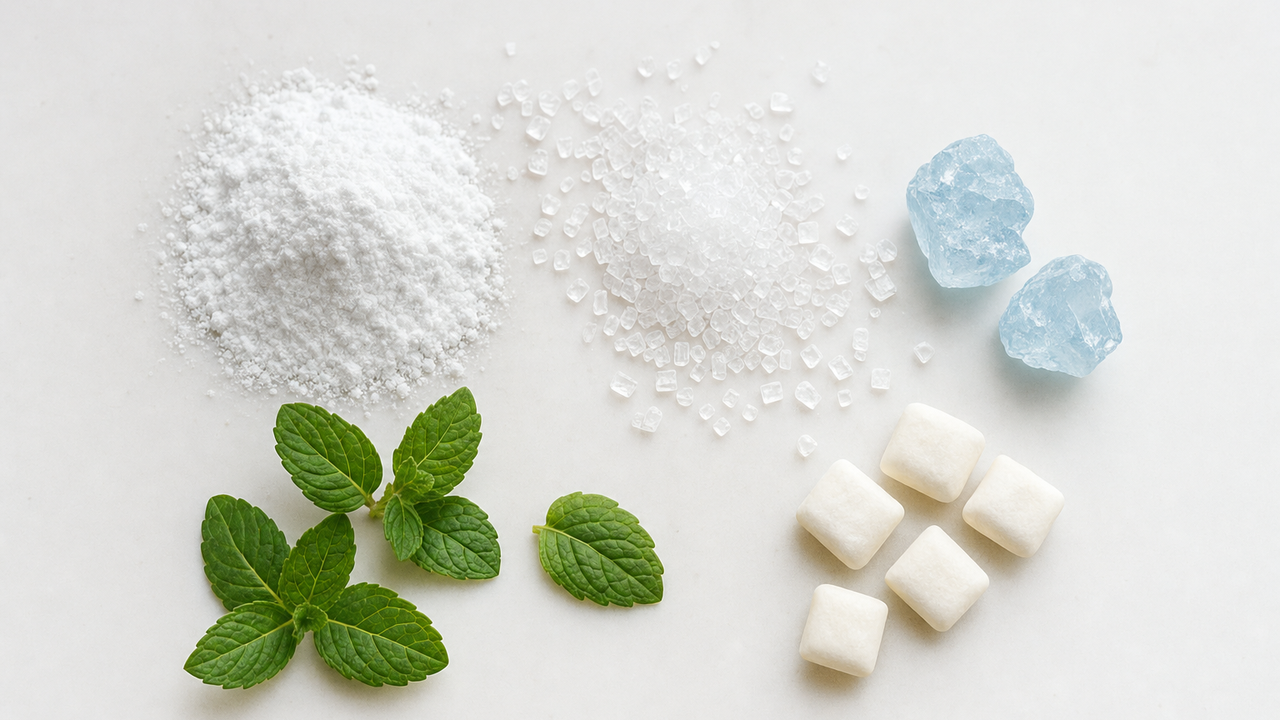
Nano-hydroxyapatite has been used in oral care for more than 40 years, in over 70 countries. What NASA first developed for astronauts back in the 1970s is now something dentists reach for every day, and the research keeps backing up why. It is the same mineral that makes up about 97% of your enamel, so your teeth recognize it and let it settle into the microscopic rough spots.
Together, those two moves give cold and sweet triggers far less of a way in.
"I tried three sensitivity toothpastes, special rinses, even a pricey in-office treatment. Nothing really stuck. About a week after I started chewing this after coffee, I sipped an iced drink and felt nothing. No zing. I actually laughed out loud."
While you keep dodging cold drinks and masking the twinge, the mineral you have lost never gets replaced...
Finally, A Solution That Actually Works
Remember the research I mentioned earlier?
The mineral that makes up about 97% of your enamel?
Larineco is built around nano-hydroxyapatite, the heart of its Natural RMX50 Complex, a mineral that has been studied in oral care for decades.
No single habit fixes everything. Diet, brushing, and staying consistent all matter. But if you want a simple, clean way to help protect sensitive teeth between brushes, this is the one I keep coming back to.
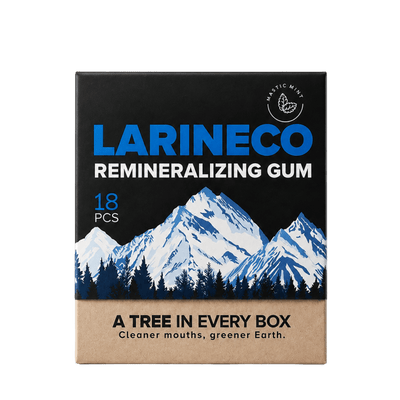
It's called Larineco™ Remineralizing Gum.
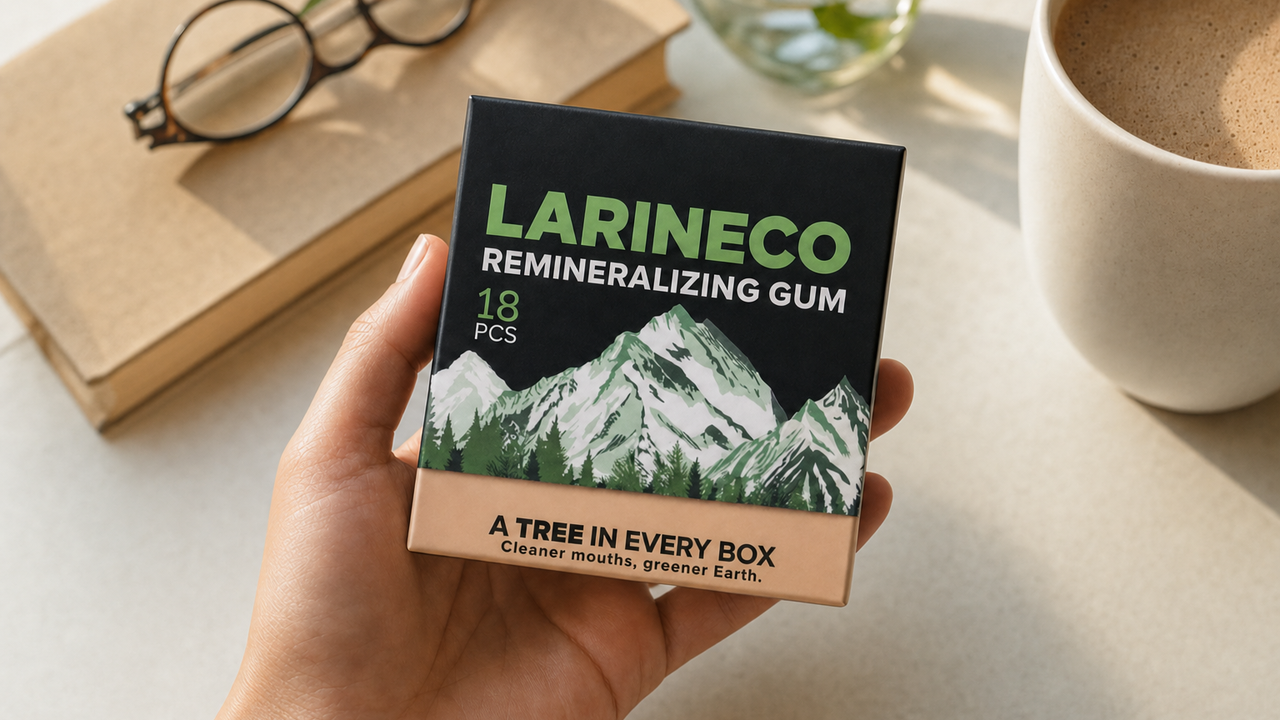
And it has genuinely changed how my mornings feel.
Each piece is built on nano-hydroxyapatite, the same mineral as enamel, in an all-natural, plastic-free gum base.
Plus xylitol, which helps keep your mouth balanced so bacteria can't feed on it.
The best part?
It's not some plastic-based chewing gum loaded with synthetic polymers.


All-natural and plastic-free, built on a plant-based gum base (most gums are basically synthetic plastic)

Nano-hydroxyapatite, used in oral care for 40+ years across 70+ countries

Trusted by 300,000+ people supporting healthier, calmer teeth.
Real People, Real Results
"
"Had tooth pain for years. Since starting the Larine program the pain is totally gone. I am so much happier and have enjoyed foods that I previously could not eat."
Air ANP | Verified Trustpilot Review
"
"Good product, good team, fixed all issues quickly."
Michael A | Verified Trustpilot Review
"
"Great prices, great product." Individual results may vary.
Emma-louise | Verified Trustpilot Review
Here's What Nobody Tells You
When you first start chewing Larineco, here is what to expect.
Most people notice a fresher, cleaner-feeling mouth within the first few days.
That fresh feeling is a good sign.
It means the nano-hydroxyapatite is doing its work, coating your teeth and settling into the rough spots.
The comfort side builds more gradually. Enamel support is a week-over-week thing, so consistency is what really pays off. Most people say that by week 3 they notice the difference when they sip something cold.

Your Teeth Are Trying To Tell You Something
Right now, your teeth are sending you signals. Those cold zings aren't random, and they aren't "just getting older."
They're WARNING SIGNS.
Every day you ignore them:
The rough spots on your enamel stay exposed
Cold, hot, and sweet keep reaching the nerve
Every acidic day pulls more minerals from your teeth
Your teeth may keep getting more sensitive
But imagine biting into ice cream and feeling nothing. No bracing yourself before that first cold spoonful.
Sipping hot coffee on both sides of your mouth.
Breathing in cold winter air without a flinch.
Smiling wide and seeing teeth that look clean and strong.
That’s what daily life feels like once you start putting back the minerals your enamel has been losing.

The Decision That Changed Everything
Sarah made her decision after years of wincing through every cold drink.
"I'd already tried a small fortune in sensitivity toothpastes and rinses that never really lasted. What's one box of gum to try? Especially
with a money-back guarantee."
A week in, cold water stopped making her flinch. Three weeks later, she’d gone a whole day sipping iced coffee without a single zing.
Six months later:
"I can eat ice cream again. I didn't realize how much I'd been holding back until I stopped bracing for that jolt."
Individual results may vary.

It’s Time To Stop Wincing
Look, the enamel you’ve already lost isn’t coming back on its own.
Every acidic coffee, every soda, every splash of citrus keeps pulling more minerals out and leaving those tiny channels open to the nerve.
You can keep dodging cold drinks and hoping the twinge fades.
Or you can start putting minerals back.
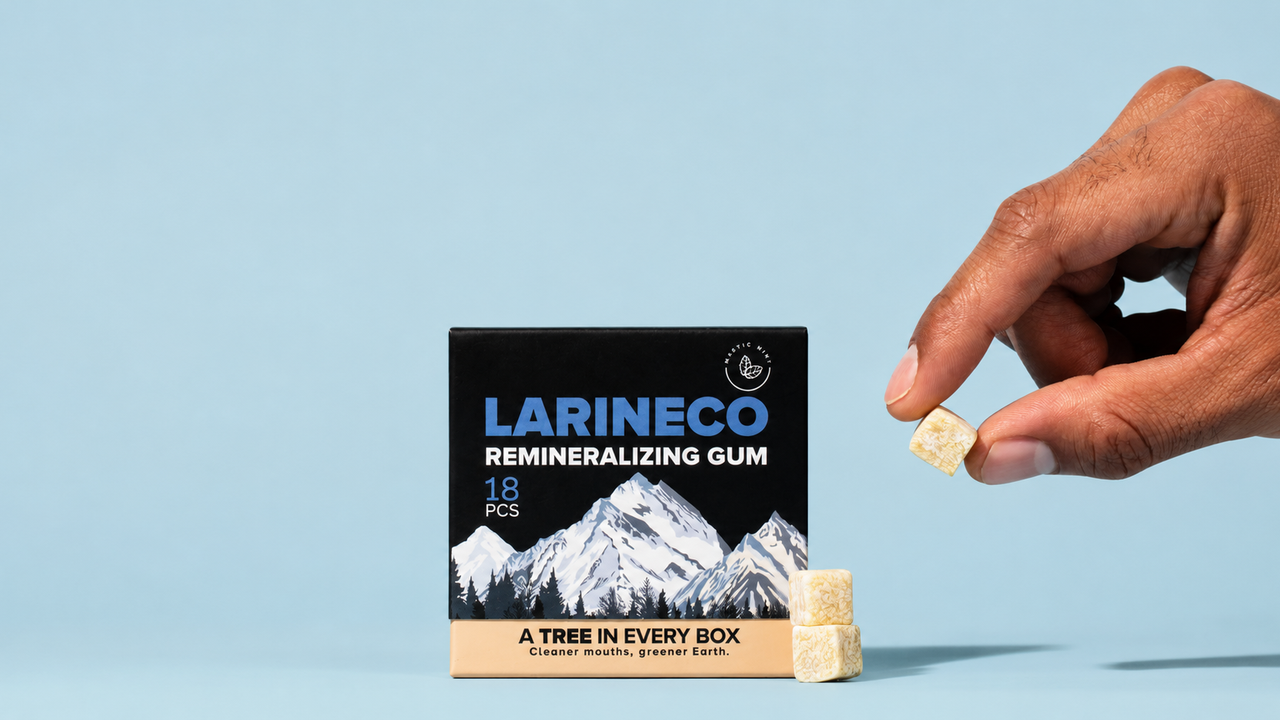
Larineco comes with a 30-day money-back guarantee because we’re confident you’ll feel the difference.
Don't wait another day. Your teeth are worth protecting.
Order Larineco™ Remineralizing Gum Now - a natural, plastic-free chewing gum built around nano-hydroxyapatite, the same mineral that makes up 97% of tooth enamel, made to chew on the go.
P.S. Sensitive teeth aren’t something you just have to live with. That zing from cold, hot, or sweet is a sign your enamel has lost minerals and left the layer underneath exposed. If two or three of the twinges from the list above sound familiar, your enamel could use some support. Larineco gum is built around nano-hydroxyapatite, the same mineral that makes up 97% of tooth enamel, and it has been used in oral care for over 40 years across more than 70 countries. As you chew, it coats your teeth and fills the microscopic rough spots, helping build a buffer against the triggers that set off sensitivity. Most people notice a fresher, cleaner-feeling mouth early, and enamel support builds gradually over the weeks that follow. Try it with the 30-day money-back guarantee and feel the difference for yourself.