




Is Chewing Gum Bad for Your Teeth and Overall Oral Health?

Chewing gum is one of those little habits you do for years and months, and then nobody ever questions. But is chewing gum bad for your teeth, or is that just one big lie we've all been telling ourselves?
The truth is, not all gums are made equal. It's easy to get confused with so many types on the market, from Big Gum's sugary sticks sold right next to the candy aisle to sugar-free and xylitol gums, and even forward-thinking brands making remineralizing gum.
Why can chewing gum be harmful to your teeth?
Chewing gum isn't bad for your teeth on its own. The problem is usually what's inside it. Gum sweetened with sugar keeps feeding the bacteria in your mouth for as long as you chew. Those bacteria turn sugar into acid, and that acid slowly wears away at your enamel.
Sugary residue can also cling to your teeth after you spit the gum out, which keeps the acid attack going. Some fruity and sour gums add citric acid for flavor, and that acid can soften enamel even without sugar.
What are the benefits of chewing gum?
The right gum, chewed at the right times, can be good for your mouth. Chewing gets your saliva flowing, and saliva is one of your body's best natural defenses for your teeth. It helps:
-
Fight acid buildup: Saliva helps clear the acids bacteria release after you eat, before they can weaken your enamel.
-
Support enamel: Saliva carries calcium and phosphate back to your teeth, which helps remineralize early weak spots.
-
Slow bacterial growth: The bacteria behind cavities can’t use xylitol for fuel the way they use sugar, and studies have found it can help slow their growth.
-
Reduce surface stains: Chewing after coffee or red wine may help lessen the stains that build up on your teeth.
-
Ease dry mouth and bad breath: Chewing keeps your mouth moist and helps clear out odor-causing bacteria.
Can the wrong gum harm your oral health?
Yes. Gum made with sugar, corn syrup, or other added sugars can undo the benefits of all that extra saliva. You get the saliva flow, but you also give bacteria a steady food source. Some of that sugar can turn sticky and cling to your teeth, where saliva has a harder time washing it away.
That sugar tends to settle where it's hardest to clean, like the grooves of your back teeth and the tight spaces between them. As bacteria feed on it, they build up into plaque along your gumline, which can irritate your gums and lead to gingivitis over time.
How gum can help teeth and oral health

This is where remineralizing gum comes in.
Your enamel is in a constant tug of war between losing minerals and gaining them back, a cycle known as demineralization and remineralization. Acids from food and bacteria pull minerals out, while saliva works to put them back. After you eat or drink, the pH around your teeth drops, and your enamel starts losing minerals faster than saliva can replace them. If the losses keep outpacing the repairs, weak spots form that can deepen into cavities or expose the sensitive dentin underneath.
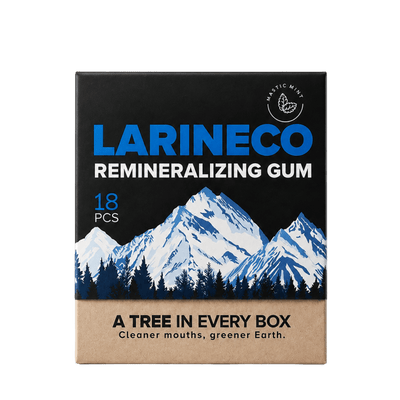
Larineco Remineralizing Gum uses nano-hydroxyapatite, a nano-sized form of the mineral your enamel is made of. Its tiny particles settle into early weak spots and help replenish lost minerals.
Xylitol is a sugar-free sweetener that the bacteria behind plaque can't use. They take it in like sugar but can’t break it down, and studies have found xylitol can help slow their growth. Chewing xylitol gum also gets your saliva flowing, which helps wash away bacteria and food acids.
In a 30-day consumer study of Larineco™ Remineralizing Gum, 84% of participants said their breath felt fresher, 87% said their mouth felt clean and refreshed, and 74% said their teeth felt smoother.*
Chewing a piece after breakfast, lunch, and dinner turns an everyday habit into a healthier one for your teeth.
*Based on participant-reported results after 30 days of once-daily use in a single-group, open-label study; n=38 at Day 30.
Remineralizing gum vs. non-remineralizing gum

The difference between remineralizing and non-remineralizing gum is whether it actively strengthens your enamel.
-
Non-remineralizing gum: Gets saliva flowing to neutralize acids and wash away food, relying only on the minerals already in your saliva.
-
Remineralizing gum: Does the same, but also adds minerals like nano-hydroxyapatite that settle into weak spots on your enamel.
How to choose the best options
Next time you're shopping for gum, it's best to find something that actively helps your oral health, not hurts it, and is made with natural ingredients. Look for:
-
Remineralizing nano-hydroxyapatite to support enamel health
-
Xylitol to help fight cavity-causing bacteria
-
Ingredients that support a balanced oral environment
-
A natural gum base instead of synthetic polymers
-
A gum that's completely sugar-free
Frequently Asked Questions
Does remineralizing gum have additional benefits with daily use?
Your enamel loses and regains minerals throughout the day, so a daily routine matters. Chewing a piece after meals is an easy way to keep mineral support part of your day. In our 30-day study, 95% of participants said the gum was easy to fit into their daily routine, and 66% said their teeth felt less sensitive.*
*Based on participant-reported results after 30 days of once-daily use in a single-group, open-label study; n=38 at Day 30.
Can chewing gum cause TMJ?
Chewing gum in moderation rarely causes TMJ problems, but chewing hard or for long stretches can strain your jaw and raise your risk. If you already have jaw pain or a TMJ disorder, it's best to avoid gum and talk to your dentist.
Do dentists recommend chewing gum?
Yes, many dentists recommend sugar-free gum. Chewing it for 20 minutes after meals is a widely recommended best practice, because it increases saliva, which neutralizes acids and washes away food.
What is the healthiest gum for your teeth and oral health?
The healthiest gum for your teeth is sugar-free gum made with xylitol and a remineralizing ingredient like nano-hydroxyapatite. That combination helps fight cavity-causing bacteria while supporting your enamel.
Why settle for gum that masks your breath and hurts your teeth when you could be actively supporting your oral care? Larineco™ is designed to be oral care between brushes that helps support strong enamel and a healthier mouth. Try it risk-free for 30 days.
